
ServicesAI & automationStartups to enterprise
AI and automation put to work on real operational workflows.

Overview
What this service covers.
We implement AI and automation where they solve a concrete operational problem: document and data workflows, retrieval and search, classification and summarization, intelligent interfaces, and orchestration inside existing software.
Most repetitive work in an operations team falls into a few patterns: reading documents and keying in data, routing requests, looking things up across systems, and writing similar responses over and over. Some of it is best solved with rules-based automation, some with AI, and much of it with a combination.
We implement AI and workflow automation where it solves a specific operational problem, inside the systems your team already uses, with human review wherever the cost of a mistake is high.
A strong fit when
- People spend hours extracting data from documents, emails or forms into other systems.
- Staff search across several tools or long documents to answer routine questions.
- Requests, tickets or cases need to be classified and routed before anyone can act on them.
- You have an AI pilot that works in a demo but is not yet reliable or connected to real systems.
Consider another route when
- The process is fully rule-based and stable. Conventional automation will be cheaper and more predictable.
- There is no clear owner for the process or no way to check whether outputs are correct.
Capabilities
What we deliver.
- 01
Workflow automation
Reduce repetitive operational steps with reliable automation tied to your processes
- 02
Document and information extraction
Extract, classify, summarize, and route information from documents and structured sources
- 03
Retrieval and search
Find the right internal knowledge or records with retrieval-augmented approaches when they fit
- 04
AI-assisted internal tools
Assist operators inside tools they already use, with human review where the risk requires it
- 05
Natural-language interfaces
Chat or query interfaces scoped to real use cases on top of your systems and data
- 06
Integration into existing software
Connect models and automation to APIs, databases, and applications you already run
Tools and technologies
- LLM integration
- Workflow orchestration
- Retrieval systems
- Python services
- API integration
- Internal tooling
Approach
How we think about it.
- 01
AI or rules-based automation
Not every automation project needs a language model. When the inputs are structured and the decisions follow clear rules, conventional workflow automation or RPA is faster to build, cheaper to run and easier to audit. AI earns its place when the inputs are messy, such as free-text emails, scanned documents or varied layouts, or when the task involves summarizing, classifying or answering questions in natural language.
Many reliable systems combine both: AI turns unstructured input into structured data, and deterministic rules decide what happens next. That keeps the unpredictable part small and easy to check.
- 02
Retrieval over your own knowledge
Retrieval-augmented generation (RAG) lets an assistant answer questions from your documents, policies or records instead of from general knowledge. It works well when the source material is reasonably current and well organized, and when answers can cite where they came from. It works poorly when the underlying content is contradictory or out of date, which no model can fix.
We start by checking the source material, then design retrieval, permissions and citations so people can verify an answer instead of trusting it blindly.
- 03
From pilot to production
The gap between a promising demo and a dependable system is usually evaluation and integration. We build a set of real examples with expected outcomes, measure the system against it, and keep it as a regression test as prompts, models and data change.
In production, every automated step is logged, low-confidence results go to a human review queue, and there is a clear fallback when an external model is unavailable. Data handling, retention and which providers may process your data are agreed before anything goes live.
How we work
From scope to release.
01
Stage 1Use-case and data assessment
- You get
- A short list of candidate use cases with expected effort saved, data availability and risk.
02
Stage 2Approach selection
- You get
- A chosen approach (rules, AI or both) and how quality will be measured.
03
Stage 3Pilot or proof of value
- You get
- A working pilot on your real data, evaluated against agreed examples before wider rollout.
04
Stage 4Production integration
- You get
- Production integration with logging, review queues, access controls and fallbacks.
05
Stage 5Monitoring and iteration
- You get
- Monitoring of quality and cost, and iteration based on real usage.
Related work
AI & automation in practice.
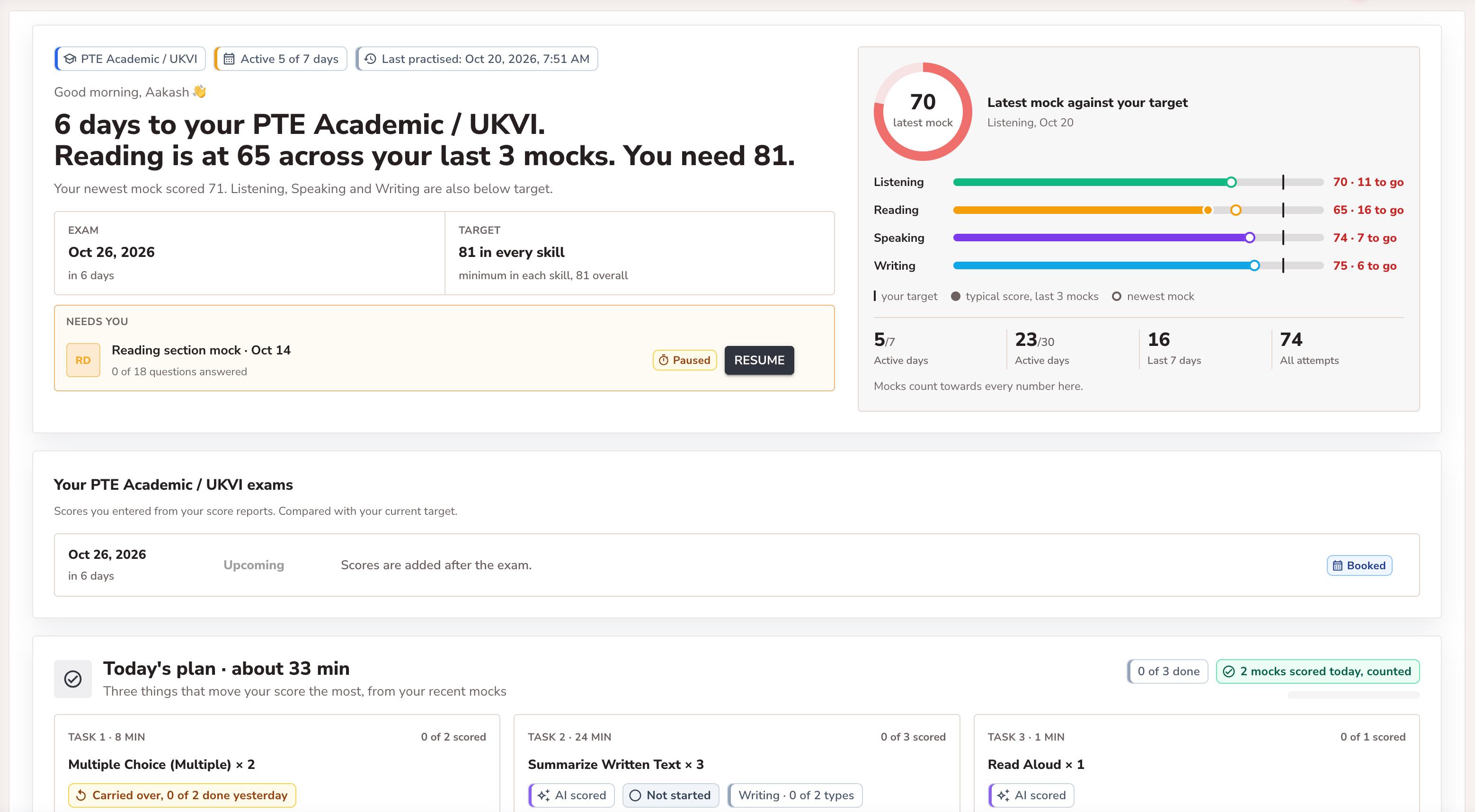 Education Technology
Client
EdKnot
practice questions
Making PTE preparation more focused with AI-powered practice
- Web Application Development
- EdTech Platform
- AI Integration
- Read the case study
 UiPath
Client
RPA
automation projects
RPA across operations, clinics, and compliance
- UiPath
- Workflow automation
- System integration
- Read the case study
Explore the full portfolioAll case studies
FAQ
Common questions.


Related services
Often combined with.
 Connected systems, so data moves reliably across the business.
System integration
 Software engineered around how your business actually operates.
Custom software development
 Fast, secure web platforms for customers, partners, and internal teams.
Web application development
Explore every capabilityAll services
Let’s build what’s next
Tell us what you are building and we will show you how we would deliver it.