
One team across the full stack
AI, engineering, infrastructure, and security sit under one roof — so a recommendation in one area accounts for its impact on the others, instead of optimising a single service in isolation.

Case Study / EdTech
EdKnot brings mock tests, question-level practice, AI-assisted scoring, and performance insights into one learning experience — built for PTE candidates who want to prepare more effectively.
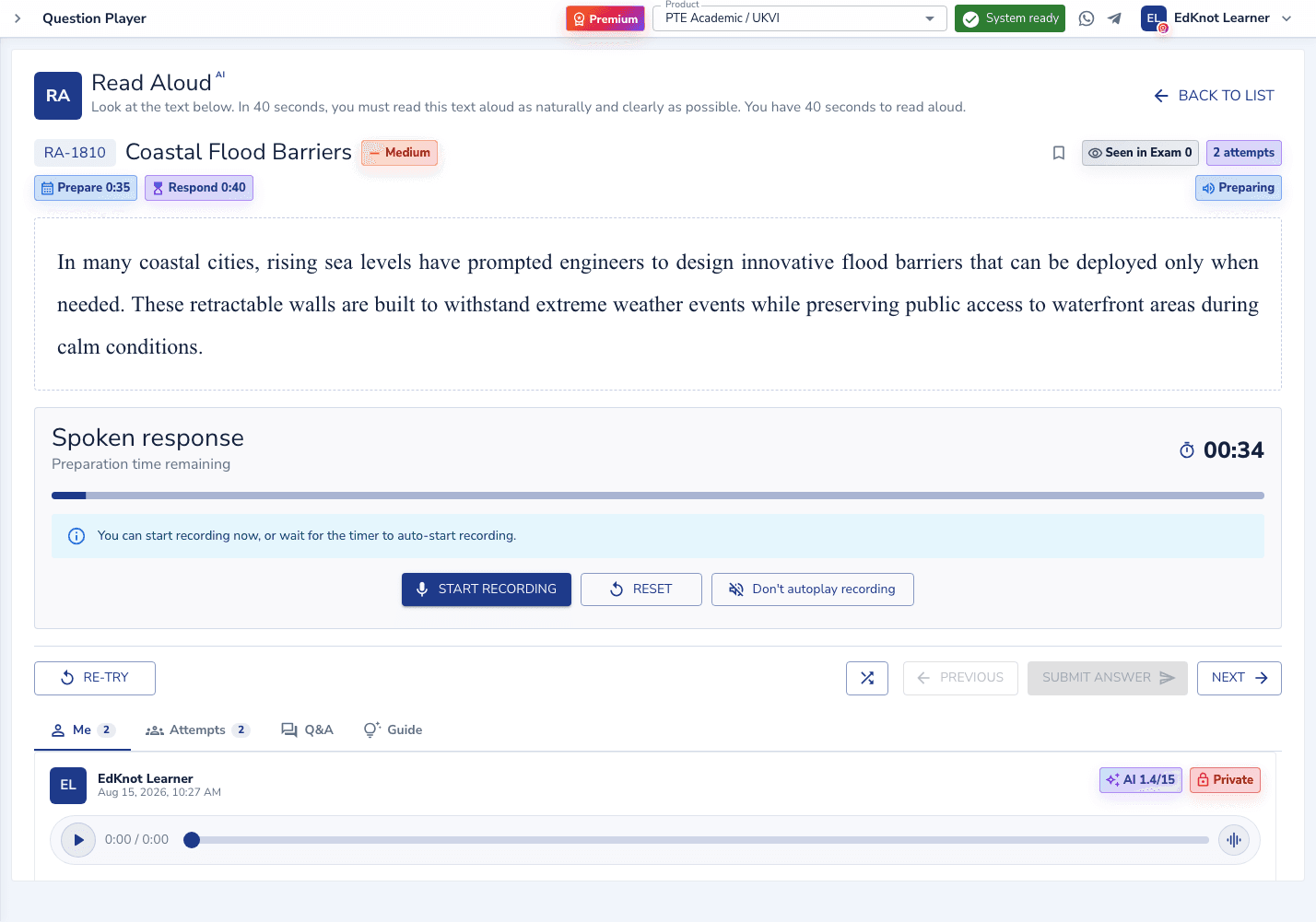
PTE candidates need more than mock tests and section scores. EdKnot brings targeted practice, AI scoring feedback, and performance review into one coherent preparation experience.
Candidates typically assemble preparation from multiple sources — with no single view of progress and no clear connection between test results and what to practise next.
Build a web platform where mock tests, question-level practice, and AI scoring work together — so every result tells a candidate what to do next, not just how they performed.
Key capabilities
The challenge
PTE preparation requires more than sitting through mock tests and reviewing a total score. Candidates need to understand which task types cost them points, practise those specifically, and track whether targeted work is actually moving the result.
Section-level scores tell candidates where they landed — they don't identify which task types are pulling the total down or what to practise next.
Completing a full mock test is valuable, but repeating the same format without targeted practice between attempts produces diminishing returns.
Candidates assemble preparation from multiple sources. Each context switch creates friction and makes progress harder to track over time.
Knowing a response scored 60 is less useful than understanding which elements of the response brought the estimate down.
The product experience
01
A question bank covering all 22 PTE Academic / UKVI and 19 PTE Core question types — 21,000+ items in total.
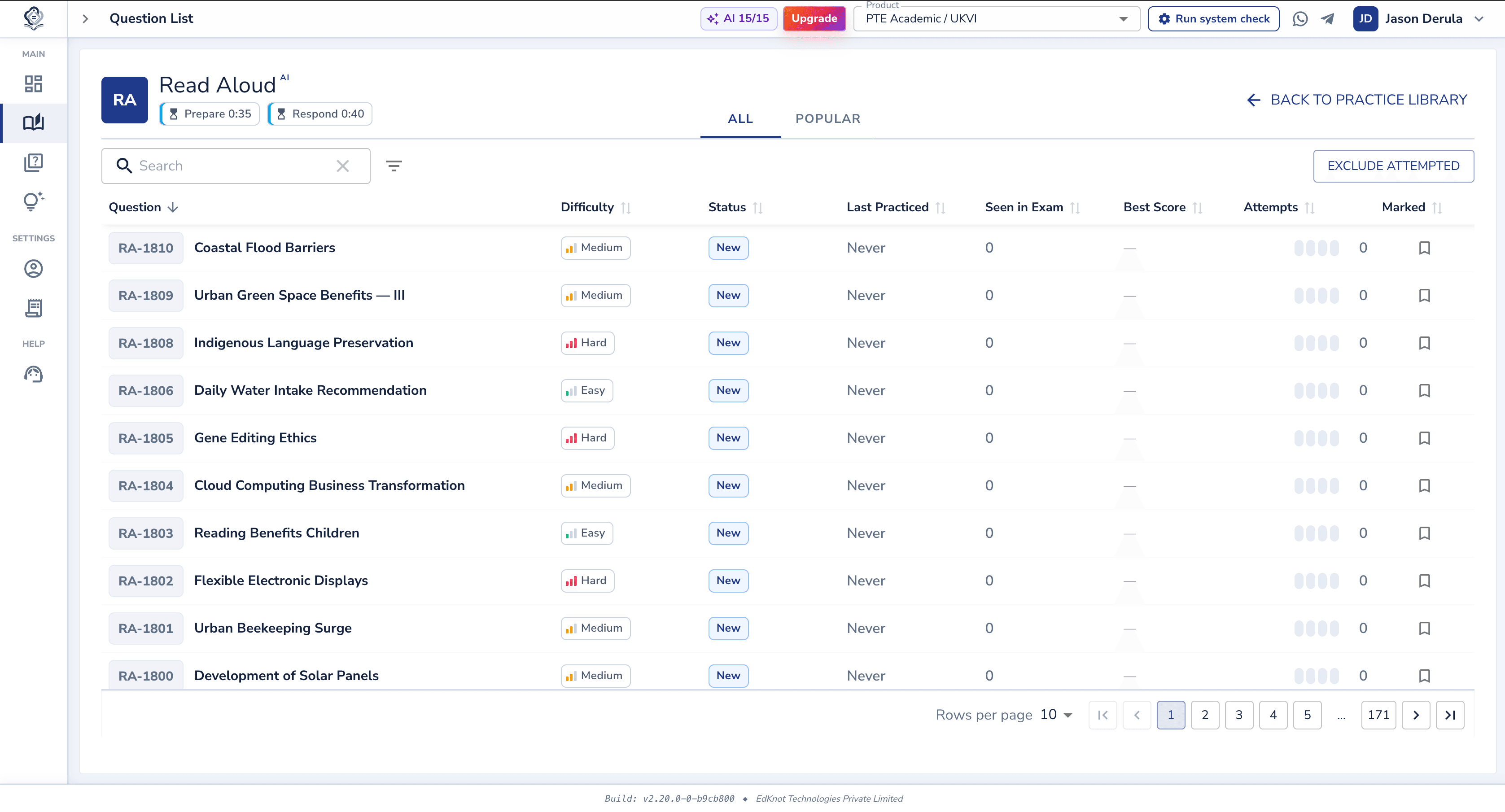
Question-bank interface — task-based navigation with timed response windows across all 41 question types.
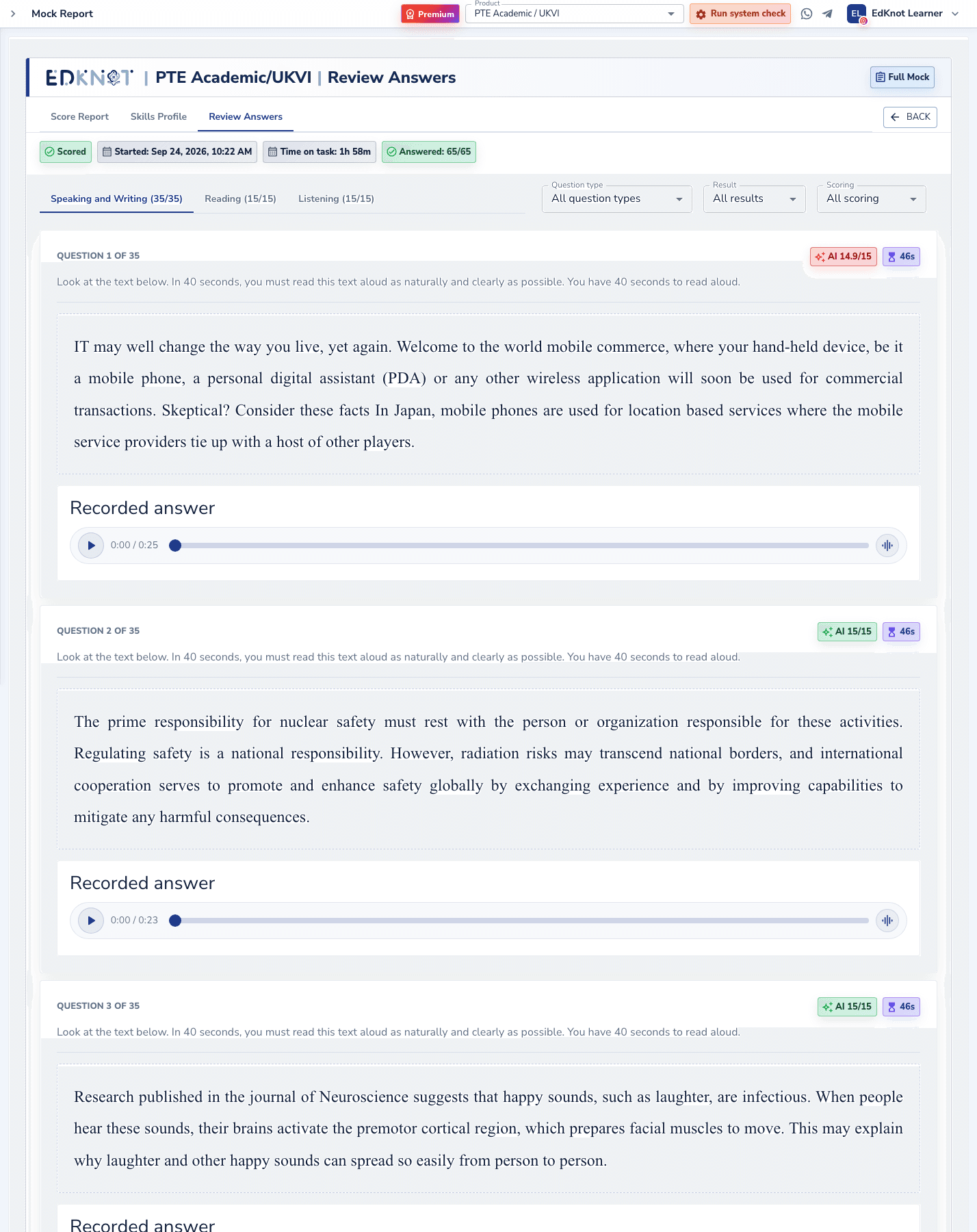
Scoring view — response-level feedback that helps candidates understand what to improve. Scores are practice estimates, not official PTE results.
02
Practice scoring and response-level feedback on speaking and writing submissions.
Practice scores are estimates to support preparation — not official PTE Academic or PTE Core scores.
03
Structured, timed assessments following the PTE question sequence, with post-test performance review.
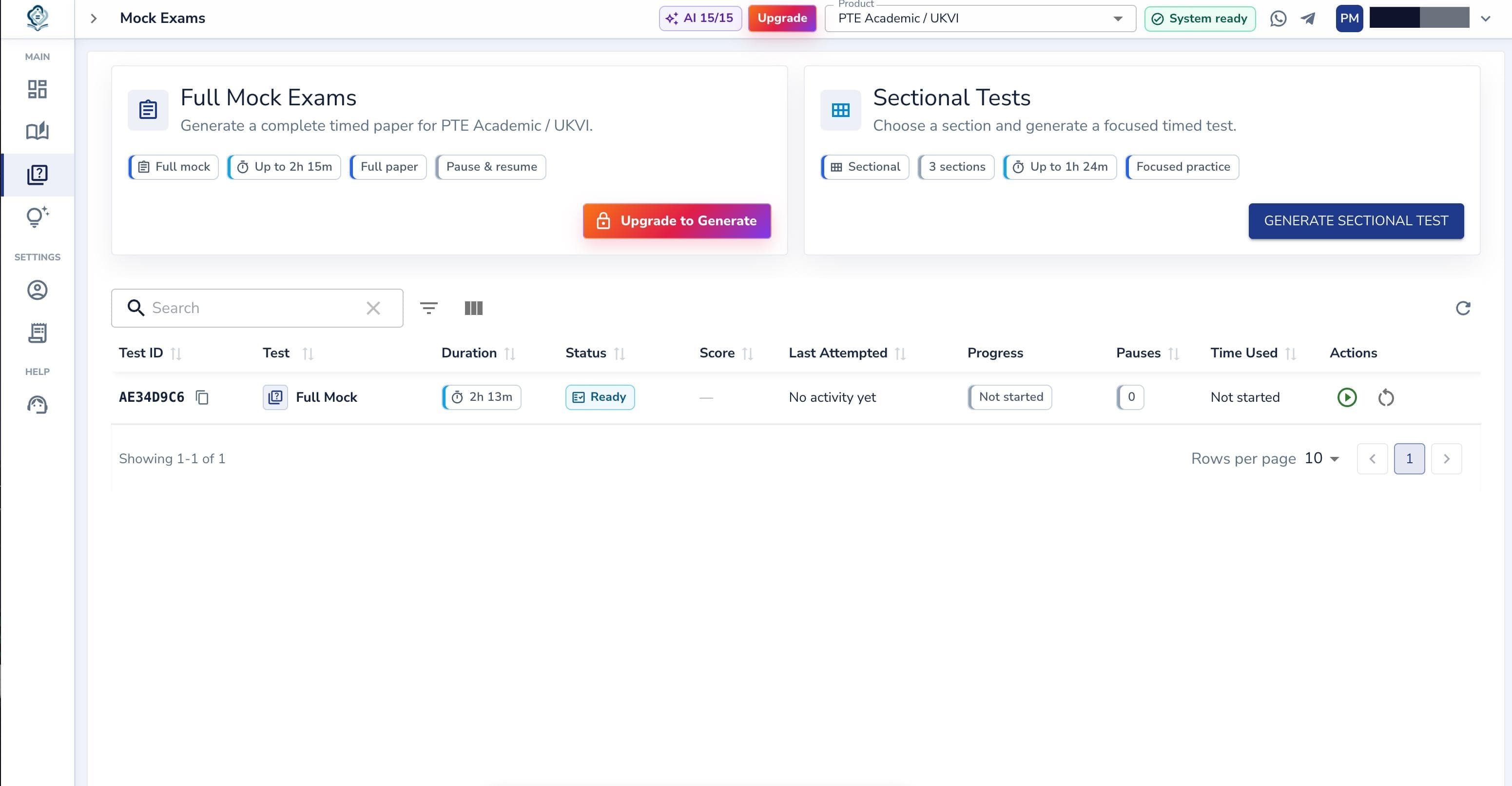
Mock test performance review — post-assessment breakdown across speaking, writing, reading, and listening.
Engineering
Building a PTE preparation platform means solving a set of engineering problems that repeat consistently across question types, sessions, and candidates — each requiring careful design to feel reliable and purposeful.
PTE covers 41 distinct question types across four language skills, each with a different interaction model — timed recordings, written inputs, drag-and-drop ordering, multiple-select responses. Each type requires its own practice interface and response handling.
Speaking and writing tasks have specific time constraints that affect how responses are captured and reviewed. Practice sessions need to reflect those constraints accurately to prepare candidates for the real test experience.
A full mock test spans all four skills with sequenced question types. The platform needs to manage test state reliably and produce a consistent performance review that candidates can interpret and act on.
Candidates access the platform across different devices and screen sizes. Practice interfaces — including response input, audio playback for listening tasks, and results review — need to remain usable regardless of where a session happens.
Communicating practice scores and response feedback clearly matters as much as computing them. The interface needs to distinguish practice estimates from official scores and present feedback in a way that supports improvement rather than just recording a number.
Candidates return to the platform across multiple sessions. The experience needs to support returning to specific question types, reviewing prior attempts, and building on previous mock results — not starting fresh each time.
Product capabilities
The following are published product capabilities sourced from EdKnot's public platform — they describe what the product offers, not engagement outcomes.
21,000+
Practice questions
A large question bank across PTE Academic, UKVI, and PTE Core formats. Candidates can practise individual question types without running short on material.
22
PTE Academic / UKVI types
Complete coverage of the PTE Academic and UKVI question type inventory, across speaking, writing, reading, and listening.
19
PTE Core types
Full coverage of PTE Core question types, supporting candidates preparing for Canadian immigration and other PTE Core pathways.
1
Free scored mock
New learners receive one complete, scored mock test to experience the full platform before committing to a subscription.
Product value
These are observable product qualities based on EdKnot's public platform — not engagement outcomes or claimed conversion metrics. We describe what the product does, not results we cannot verify.
Practice questions, mock tests, and scoring feedback share the same platform. Results from one session inform the next without candidates switching between tools or manually tracking their own progress.
Scoring estimates on speaking and writing responses give candidates something to act on — not just a number to compare with a target, but an indication of where the response fell short and what to work on next.
Candidates preparing for PTE Academic, UKVI, or PTE Core can work through the question types relevant to their specific format. The platform covers all three without requiring a different preparation tool for each.
The platform is designed for self-directed learners. Timed practice, mock tests, and performance review give candidates enough structure to prepare independently — while leaving room for those working alongside a coach to use the same tools.
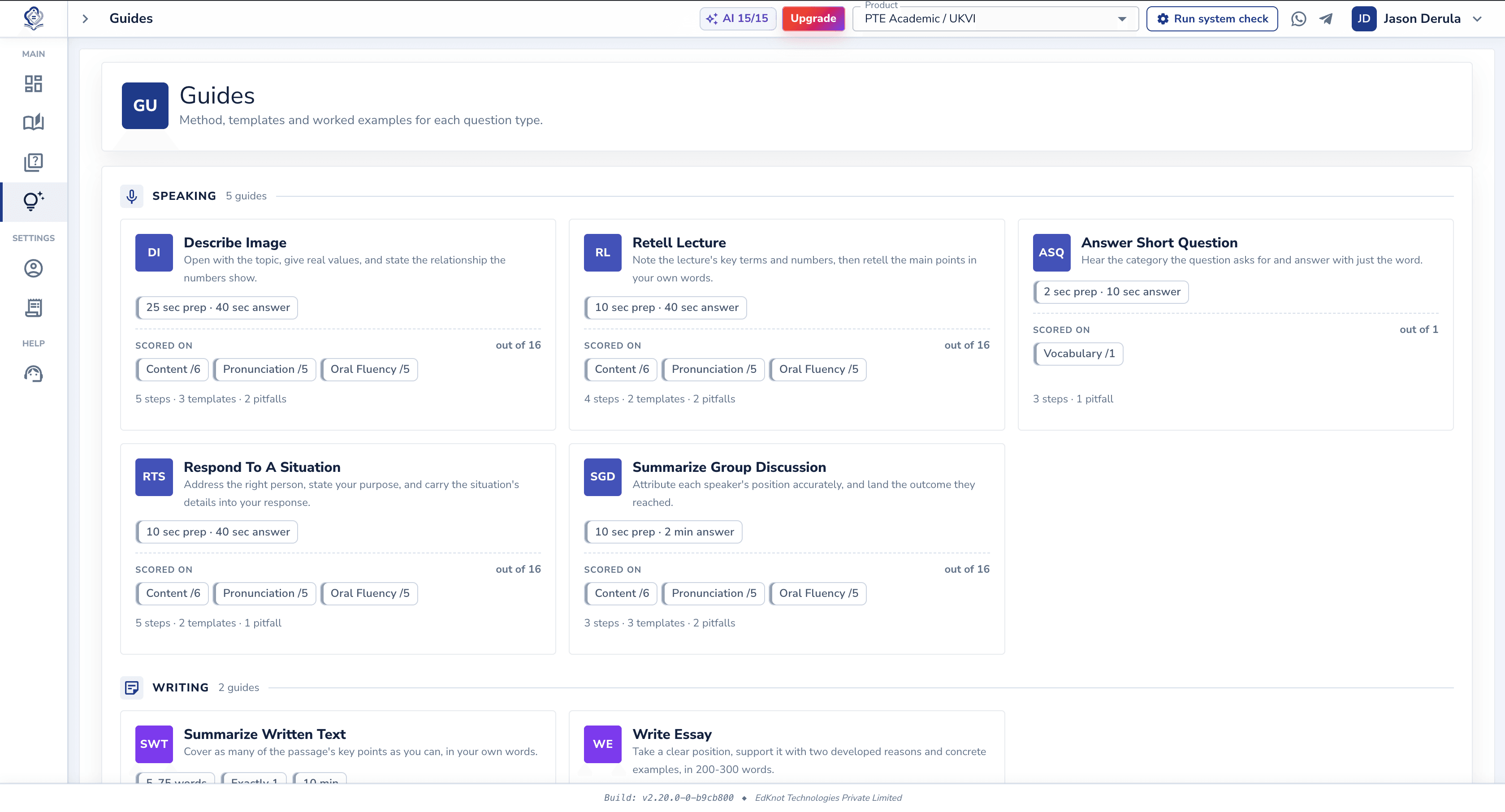
EdKnot Guides — method, templates, and worked examples for each question type across speaking and writing.
Choosing a technology partner usually comes down to trust in their judgment as much as their technical ability. Here's what that looks like in practice.
AI, engineering, infrastructure, and security sit under one roof — so a recommendation in one area accounts for its impact on the others, instead of optimising a single service in isolation.
You work with engineers who stay involved throughout the engagement, supported by a technical lead accountable for quality.
You review working software as it progresses, with clear documentation of what has been built and what is still in progress.
Documentation, tests and handover are part of the engagement, so your team can operate and extend what we build.
Many projects need more than one service. A SaaS platform may need software development and cloud delivery, and AI features only where there is a clear business case. Because these areas sit inside one team, you do not have to re-explain your product each time the scope shifts.
It also keeps recommendations grounded in what is feasible to build and maintain.
AI and workflow automation, including retrieval-based knowledge search, tested against representative examples.
Custom software, web applications and mobile apps, from initial architecture through launch.
System integration, data modeling and analytics, so teams work from consistent information.
Cloud and DevOps, product UI/UX design, and separately scoped ongoing support after handover.
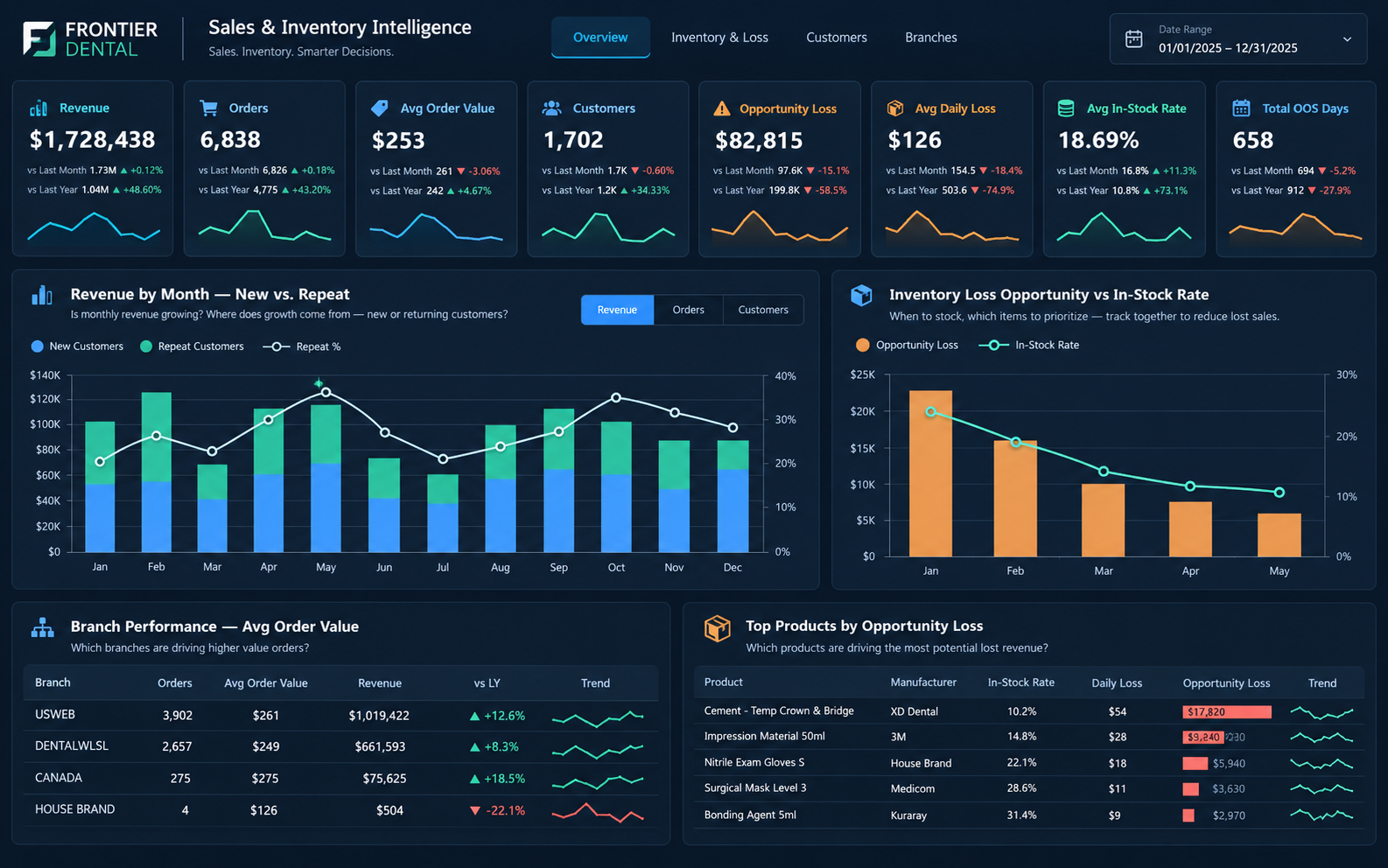
See how CodexSmith organized sales and inventory reporting in Power BI to support commercial analysis and purchasing decisions.
Twenty-one UiPath and workflow automations, from shipment tracking and clinic bookings to SAP orders and compliance reminders.
Work with us
We help turn complex product requirements into reliable software experiences designed for real users.